Rings of Jupiter
|
|
This post and/or page contains affiliate links, at no additional cost
to you I am compensated only if you purchase after clicking on the links.
to you I am compensated only if you purchase after clicking on the links.

|
This post and/or page contains affiliate links,
at no additional cost to you I am compensated only if you purchase after clicking on the links. |
 "Miss Teen USA 2023, UmaSofia Srivastava" "Miss Teen USA 2023, UmaSofia Srivastava"
"Miss Teen USA is a beauty pageant run by the Miss Universe Organization for girls aged 14–19. Unlike its sister pageants Miss Universe and Miss USA, which are broadcast on Fox, this pageant is webcast on the Miss Teen USA website and simulcast on mobile devices and video game consoles. The pageant was first held in 1983 and has been broadcast live on CBS until 2002 and then on NBC from 2003–2007. In March 2007, it was announced that the broadcast of the Miss Teen USA pageant on NBC had not been renewed, and that Miss Teen USA 2007 would be the final televised event. From 2008–15, the pageant was held at the Atlantis Paradise Island Resort, located in Nassau, Bahamas. The current titleholder is Hailey Colborn of Kansas who was crowned on May 18, 2018 at Hirsch Memorial Coliseum in Shreveport, Louisiana. Prior to the final telecast the delegates compete in the preliminary competition, which involves private interviews with the judges and a presentation show where they compete in swimsuit and evening gown. During the final competition, the semi-finalists are announced and go on to compete in swimsuit and evening gown. From 1983 to 2002 all semi-finalists also competed in an interview competition as well as both swimsuit and evening gown, followed by one or two final interview questions. In 2003, a new format was introduced where the top fifteen competed in evening gown, the top ten competed in swimsuit and the top five competed in the final question. In 2006, the order of competition was changed where the top fifteen competed in swimsuit and the top ten in evening gown. The latest competition format was used since 2008 the final not broadcast on TV, where the top fifteen both competed in swimsuit and evening gown, and the top five competed in the final question who all signed up by a panel of judges. Former Miss Teen USA Katherine Haik wanted to eliminate the swimsuit competition. The swimsuit category was chastised for exploiting and sexualizing young women and not promoting diverse body types. The new active-wear portion will increase the focus on wellness and health of young ladies. The 2008 pageant was held, untelevised, on August 16, 2008. One factor that prevented NBC from broadcasting was its prime time commitment to the 2008 Summer Olympics in Beijing. Since then, it is broadcast over the Internet on the Miss Teen USA website. It can be viewed worldwide, without any region restrictions via geolocation. Currently, it is hosted by YouTube (Ustream from 2008-13). In addition, the webcast can be accessed on the pageant's Facebook page and on mobile devices using the official Miss Universe mobile app released during Miss USA 2016. In 2012, the pageant began to simulcast in selected regions on Microsoft's Xbox Live service, allowing owners of the Xbox 360 and/or Xbox One consoles to watch the pageant on a television screen. In 2017, the pageant was also broadcast on Sony's PlayStation Network service. The 2017 pageant was the first to include both a 360-video option for virtual reality headsets and HDR10 support for Xbox One S owners. The 2018 pageant is expected to support certain features of the forthcoming Xbox One X console, such as Dolby Atmos sound and 4K upscaling."
SPECIAL PAGEANTRY MESSAGE: "Miss Teen USA 2020 was the 38th Miss Teen USA pageant. Due to the ongoing COVID-19 pandemic, it was originally slated for spring 2020, and held on November 7, 2020 at the Exhibition Centre and the Sound-stage at Graceland in Memphis, Tennessee. 51 delegates from the 50 states and the District of Columbia are selected in state pageants which began in September 2019 and ended in February 2020." Source: Wikipedia.org | Saturday, December 12, 2020, 11:59 PM |
|
This post and/or page contains affiliate links,
at no additional cost to you I am compensated only if you purchase after clicking on the links. |

"The United States Postal Service (USPS) is an independent agency of the United States government responsible for providing postal service in the United States. It is one of the few government agencies explicitly authorized by the United States Constitution. The U. S. Mail traces its roots to 1775 during the Second Continental Congress, where Benjamin Franklin was appointed the first postmaster general. The Post Office Department was created in 1792 from Franklin's operation, elevated to a cabinet-level department in 1872 & transformed in 1971 into the U. S. Postal Service as an agency of the U. S. government. The USPS as of February 2015 has 617,254 active employees and operated 211,264 vehicles in 2014. The USPS is legally obligated to serve all Americans, regardless of geography, at uniform price and quality. The USPS has exclusive access to letter boxes marked "U. S. Mail" and personal letterboxes in the United States, but still competes against private package delivery services, such as the United Parcel Service and has part use with FedEx Express. Since the early 1980s, many of the direct tax subsidies to the Post Office have been reduced or eliminated in favor of indirect subsidies, in addition to the advantages associated with a government-enforced monopoly on the delivery of first-class mail. Since the 2006 all-time peak mail volume, after which Congress passed the Postal Accountability and Enhancement Act, which mandated $5.5 billion per year to be paid into an account to fully prefund employee retirement health benefits, a requirement exceeding that of other government and private organizations, revenue dropped sharply due to recession-influenced declining mail volume, prompting the postal service to look to other sources of revenue while cutting costs to reduce its budget deficit. The USPS lost $5.5 billion in fiscal year 2014 and $5.1 billion in 2015, and its revenue was $67.8 billion in 2014 and $68.9 billion in 2015. The United States Postal Service employs some 617,000 workers, making it the third-largest civilian employer in the United States behind the federal government and Wal-Mart. In a 2006 U. S. Supreme Court decision, the Court noted: "Each day, according to the Government's submissions here, the United States Postal Service delivers some 660 million pieces of mail to as many as 142 million delivery points." As of 2014, the USPS operates 31,000 post offices and locations in the U. S., and delivers 155 billion pieces of mail annually. The USPS operates one of the largest civilian vehicle fleets in the world, with an estimated 211,264 vehicles, the majority of which are the easily identified Chevrolet/Grumman LLV and the newer Ford/Utilimaster FFV, originally also referred to as the "CRV." It is by geography and volume the globe's largest postal system, delivering 40% of the world's mail. For every penny increase in the national average price of gasoline, the USPS spends an extra $8 million per year to fuel its fleet. The number of gallons of fuel used in 2009 was 444 million, at a cost of US$1.1 billion. The fleet is notable in that many of its vehicles are right-hand drive, an arrangement intended to give drivers the easiest access to roadside mailboxes. Some Rural Letter Carriers use personal vehicles. Standard postal-owned vehicles do not have license plates. These vehicles are identified by a seven digit number displayed on the front and rear. In 2011, numerous media outlets reported that the USPS was going out of business. The USPS's strategy came under fire as new technologies emerged and the USPS was not finding ways to generate new sources of revenue. In 2016, the Postal Service collected $71.49 billion in revenue. In 2016, the USPS had its fifth straight annual operating loss, in the amount of $5.59 billion, of which $5.8 billion was the accrual of unpaid mandatory retiree health payments. The United States Postal Service Office of Inspector General was authorized by law in 1996. Prior to the 1996 legislation, the Postal Inspection Service performed the duties of the OIG. The Inspector General, who is independent of postal management, is appointed by and reports directly to the nine presidentially appointed, Senate–confirmed members of the Board of Governors of the United States Postal Service. The primary purpose of the OIG is to prevent, detect and report fraud, waste and program abuse, and promote efficiency in the operations of the Postal Service. The OIG has "oversight" responsibility for all activities of the Postal Inspection Service. Though the USPS employs many individuals, as more Americans send information via email, fewer postal workers are needed to work dwindling amounts of mail. Post offices and mail facilities are constantly downsizing, replacing craft positions with new machines and consolidating mail routes through the "Modified Interim Alternate Route Adjustment Process" agreement. A major round of job cuts, early retirements, and a construction freeze were announced on March 20, 2009."
Source: Wikipedia.org | Saturday, February 18, 2017, 3:24PM CDT |
|
|
Mismatch
Mismatch
provided by FreeThesaurus.com
"Classified Information in the US"
"The United States government classification system is established under Executive Order 13526, the latest in a long series of executive orders on the topic. Issued by President Barack Obama in 2009, Executive Order 13526 replaced earlier executive orders on the topic and modified the regulations codified to 32 C.F.R. 2001. It lays out the system of classification, declassification, and handling of national security information generated by the U. S. government and its employees and contractors, as well as information received from other governments. The desired degree of secrecy about such information is known as its sensitivity. Sensitivity is based upon a calculation of the damage to national security that the release of the information would cause. The United States has three levels of classification: Confidential, Secret, and Top Secret. Each level of classification indicates an increasing degree of sensitivity. Thus, if one holds a Top Secret security clearance, one is allowed to handle information up to the level of Top Secret, including Secret and Confidential information. If one holds a Secret clearance, one may not then handle Top Secret information, but may handle Secret and Confidential classified information. The United States does not have a British-style Official Secrets Act; instead, several laws protect classified information, including the Espionage Act of 1917, the Atomic Energy Act of 1954 and the Intelligence Identities Protection Act of 1982. A 2013 report to Congress noted that the relevant laws have been mostly used to prosecute foreign agents, or those passing classified information to them, and that leaks to the press have rarely been prosecuted. The legislative and executive branches of government, including US presidents, have frequently leaked classified information to journalists. Congress has repeatedly resisted or failed to pass a law that generally outlaws disclosing classified information. Most espionage law only criminalizes national defense information; only a jury can decide if a given document meets that criterion, and judges have repeatedly said that being "classified" does not necessarily make information become related to the "national defense." Furthermore, by law, information may not be classified merely because it would be embarrassing or to cover illegal activity; information may only be classified to protect national security objectives."
"Terminology""In the U. S., information is called "classified" if it has been assigned one of the three levels: Confidential, Secret, or Top Secret. Information that is not so labeled is called "Unclassified information." The term declassified is used for information that has had its classification removed, and downgraded refers to information that has been assigned a lower classification level but is still classified. Many documents are automatically downgraded and then declassified after some number of years. The U. S. government uses the terms Sensitive But Unclassified, Sensitive Security Information (SSI), Critical Program Information, For Official Use Only, or Law Enforcement Sensitive to refer to information that is not Confidential, Secret, or Top Secret, but whose dissemination is still restricted. Reasons for such restrictions can include export controls, privacy regulations, court orders, and ongoing criminal investigations, as well as national security. Information that was never classified is sometimes referred to as "open source" by those who work in classified activities. Public Safety Sensitive refers to information that is similar to Law Enforcement Sensitive but could be shared between the various public safety disciplines. Peter Louis Galison, a historian and Director in the History of Science Dept. at Harvard University, claims that the U. S. Government produces more classified information than unclassified information."
"Code Word classifications""Top Secret is the highest level of classification. However some information is compartmentalized by adding a code word so that only those who have been cleared for each code word can see it. This information is also known as "Sensitive Compartmented Information." A document marked SECRET (CODE WORD) could only be viewed by a person with a secret or top secret clearance and that specific code word clearance. Each code word deals with a different kind of information. The CIA administers code word clearances."
"Confidential""This is the lowest classification level of information obtained by the government. It is defined as information that would "damage" national security if publicly disclosed, again, without the proper authorization."
"Secret""This is the second-highest classification. Information is classified Secret when its unauthorized disclosure would cause "serious damage" to national security. Most information that is classified is held at the secret sensitivity."
"Top Secret""The highest security classification. "Top Secret shall be applied to information, the unauthorized disclosure of which reasonably could be expected to cause exceptionally grave damage to the national security that the original classification authority is able to identify or describe." It is believed that 1.4 million Americans have top secret clearances."
"Protecting Classified Information"
"One of the reasons for classifying state secrets into sensitivity levels is to tailor the risk to the level of protection. The U. S. government specifies in some detail the procedures for protecting classified information. The rooms or buildings for holding and handling classified material must have a facility clearance at the same level as the most sensitive material to be handled. Good quality commercial physical security standards generally suffice for lower levels of classification; at the highest levels, people sometimes must work in rooms designed like bank vaults. The U. S. Congress has such facilities inside the Capitol Building, among other Congressional handling procedures for protecting confidentiality. The U. S. General Services Administration sets standards for locks and containers used to store classified material. The most commonly-approved security containers resemble heavy-duty file cabinets with a combination lock in the middle of one drawer. In response to advances in methods to defeat mechanical combination locks, the U. S. government switched to electromechanical locks that limit the rate of attempts to unlock them. After a specific number of failed attempts, they will permanently lock, requiring a locksmith to reset them. Classified U.S. government documents typically must be stamped with their classification on the cover and at the top and bottom of each page. Authors must mark each paragraph, title and caption in a document with the highest level of information it contains, usually by placing appropriate initials in parentheses at the beginning of the paragraph, title, or caption. Commonly, one must affix a brightly colored cover sheet to the cover of each classified document to prevent unauthorized observation of classified material and to remind users to lock up unattended documents. The most sensitive material requires two-person integrity, where two cleared individuals are responsible for the material at all times. Approved containers for such material have two separate combination locks, both of which must be opened to access the contents. Restrictions dictate shipment methods for classified documents. Top Secret material must go by special courier; Secret material within the U. S. via registered mail; and, Confidential material by certified mail. Electronic transmission of classified information largely requires the use of National Security Agency approved/certified "Type 1" cryptosystems using NSA's unpublished and classified Suite A algorithms. The classification of the Suite A algorithms categorizes the hardware that store them as a Controlled Cryptographic Item under the International Traffic in Arms Regulations. CCI equipment and keying material must be controlled and stored with heightened physical security, even when the device is not processing classified information or contains no cryptographic key. NSA is currently implementing what it's calling Suite B which is a group of commercial algorithms such as Advanced Encryption Standard, Secure Hash Algorithm, Elliptic Curve Digital Signature Algorithm and Elliptic curve Diffie–Hellman. Suite B provides protection for data up to Top Secret on non-CCI devices, which is especially useful in high risk environments or operations needed to prevent Suite A compromise. These less stringent hardware requirements stem from the device not having to "protect" classified Suite A algorithms. Specialized computer operating systems known as trusted operating systems are available for processing classified information. These systems enforce the classification and labeling rules described above in software. Since 2005, however, they are not considered secure enough to allow uncleared users to share computers with classified activities. Thus, if one creates an unclassified document on a secret device, the resultant data is classified secret until it can be manually reviewed. Computer networks for sharing classified information are segregated by the highest sensitivity level they are allowed to transmit, for example, SIPRNet (Secret) and JWICS (Top Secret-SCI). The destruction of certain types of classified documents requires burning, shredding, pulping or pulverizing using approved procedures and must be witnessed and logged. Classified computer data presents special problems."
Source: Wikipedia.org | Tuesday, July 24, 2018, 12:00AM CDT |
"Grave Mistake?"
 “Find A Grave Memorial ID 104469916” “Find A Grave Memorial ID 104469916”
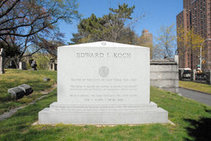
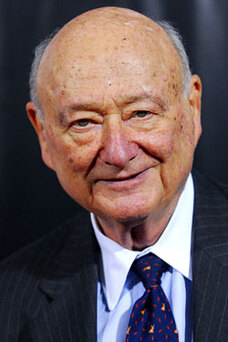
"Edward Irving Koch. The man who engraved former New York City Mayor Ed Koch's tombstone has apologized for putting on the wrong birth date. Tommy Flynn, the owner of Flynn Funeral and Cremation Memorial Services, told NBC's New York affiliate that he inadvertently listed Koch's birth year as 1942 instead of 1924. Flynn says he feels "terrible" and has vowed to correct the grave error, which was discovered over the weekend. Koch, 88, died in February of congestive heart failure. He was buried in Trinity Church cemetery in Manhattan. According to Koch's former Chief of Staff Diane Coffey, the Democratic mayor, preparing for his death in the 1980s, had planned "every detail of [his] burial," including the headstone. Koch, the city's mayor from 1978 to 1989, bought the plot in the New York Washington Heights neighborhood in 2008. "I don't want to leave Manhattan, even when I'm gone," he said at the time. According to NBC 4, Koch designed his tombstone, which included a quote from journalist Daniel Pearl before he was killed by Islamist terrorists: "My father is Jewish, my mother is Jewish, I am Jewish." Koch even visited the cemetery plot with his tombstone in place. But the 5-foot-tall, 6-foot-wide grave marker did not list his birth date when he was buried. Flynn etched the erroneous year earlier this month. "I have to make it right," Flynn said. "I will correct it." "Edward Irving Koch (December 12, 1924–February 1, 2013) was an American lawyer, politician, political commentator, movie critic and reality television arbitrator. He served in the United States House of Representatives from 1969 to 1977 and three terms as mayor of New York City, which he led from fiscal insolvency to economic boom from 1978 to 1989. Koch was born in The Bronx, New York City, the son of Yetta and Louis Koch, immigrants from Eastern Galicia. He came from a family of Conservative Jews who resided in Newark, New Jersey, where his father worked at a theater. As a child, he worked as a hatcheck boy in a Newark dance hall. He graduated from South Side High School in Newark in 1941. He was drafted into the United States Army in 1943, where he served as an infantryman with the 104th Infantry Division, landing in Cherbourg, France, in September 1944."
Source: Yahoo! News, June 18, 2013 "Mann Act"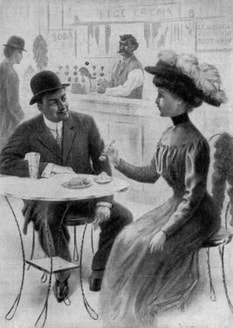
"The White-Slave Traffic Act, or the Mann Act, is a United States federal law, passed June 25, 1910 (ch. 395, 36 Stat. 825; codified as amended at 18 U. S. C. §§ 2421–2424). It is named after Congressman James Robert Mann of Illinois, and in its original form made it a felony to engage in interstate or foreign commerce transport of "any woman or girl for the purpose of prostitution or debauchery, or for any other immoral purpose." Its primary stated intent was to address prostitution, immorality, and human trafficking, particularly where trafficking was for the purposes of prostitution. This is one of several acts of protective legislation aimed at moral reform during the Progressive Era. In practice, its ambiguous language about "immorality" has resulted in its being used to criminalize even consensual sexual behavior between adults. It was amended by Congress in 1978 and again in 1986 to apply to transport for the purpose of prostitution or illegal sexual acts. Although the law was created to stop forced sexual slavery of women, the most common use of the Mann Act was to prosecute men for having sex with underage females. The phrase "immoral purpose" in the statute allowed an extremely broad application of the law following the United States Supreme Court ruling in Caminetti v. United States (1917), which held that "illicit fornication," even when consensual, constituted an "immoral purpose." In addition to its stated purpose of preventing human trafficking, the law was used to prosecute unlawful premarital, extramarital, and interracial relationships. The penalties would be applied to men whether or not the woman involved consented and, if she had consented, the woman could be considered an accessory to the offense. Some attribute enactment of the law to the case of world champion heavyweight boxer Jack Johnson. Johnson was known to be intimate with white women, some of whom he met at the fighting venue after his fights. The year the Mann Act of 1912 was enacted he was prosecuted, and later convicted, for "transporting women across state lines for immoral purposes" as a result of his relationship with a white prostitute named Belle Schreiber; the month prior to the prosecution, Johnson had been charged with violating the Mann Act due to traveling with his white girlfriend, Lucille Cameron, who refused to cooperate with the prosecution and whom he married soon thereafter."
Source: Wikipedia.org | Tuesday, July 24, 2018, 2:01PM CDT |


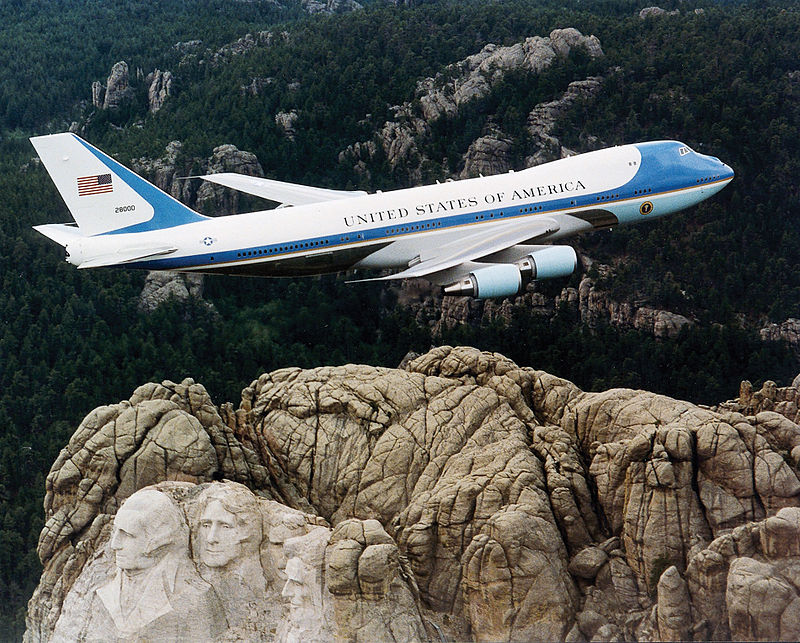
"The President of the United States (POTUS) is the elected head of state and head of government of the United States. The president directs the executive branch of the federal government and is the commander-in-chief of the United States Armed Forces. The President is considered to be one of the world's most powerful political figures, as the leader of the only contemporary global superpower. The role includes being the commander-in-chief of the world's most expensive military with the second largest nuclear arsenal and leading the nation with the largest economy by nominal GDP. The office of President holds significant hard and soft power both in the United States and abroad. The president is indirectly elected by the people through the Electoral College to a four-year term, and is one of only two nationally elected federal officers, the other being the Vice President of the United States. The Twenty-second Amendment (adopted in 1951) prohibits anyone from being elected president for a third term. It also prohibits a person from being elected to the presidency more than once if that person previously had served as president, or acting president, for more than two years of another person's term as president. In all, 44 individuals have served 45 presidencies (counting Grover Cleveland's two non-consecutive terms separately) spanning 57 full four-year terms. Under the Former Presidents Act, all living former presidents are granted a pension, an office, and a staff. The pension has increased numerous times with Congressional approval. Retired presidents now receive a pension based on the salary of the current administration's cabinet secretaries, which was $199,700 each year in 2012. Former presidents who served in Congress may also collect congressional pensions. The act also provides former presidents with travel funds and franking privileges. Prior to 1997, all former presidents, their spouses, and their children until age 16 were protected by the Secret Service until the president's death. In 1997, Congress passed legislation limiting secret service protection to no more than 10 years from the date a president leaves office. On January 10, 2013, President Obama signed legislation reinstating lifetime secret service protection for him, George W. Bush, and all subsequent presidents. A spouse who remarries is no longer eligible for secret service protection. Pursuant to the Twentieth Amendment, the president's term of office begins at noon on January 20 of the year following the election. This date, known as Inauguration Day, marks the beginning of the four-year terms of both the president and the vice president. Before executing the powers of the office, a president is constitutionally required to take the presidential oath: I do solemnly swear (or affirm) that I will faithfully execute the Office of President of the United States, and will to the best of my Ability, preserve, protect and defend the Constitution of the United States. Although not required, presidents have traditionally palmed a while swearing the oath and have added, "So help me God!" to the end of the oath. Further, although the oath may be administered by any person authorized by law to administer oaths, presidents are traditionally sworn in by the Chief Justice of the United States. Vacancies in the office of President may arise under several possible circumstances: death, resignation and removal from office. The United States Constitution mentions the resignation of the president, but does not regulate its form or the conditions for its validity. Pursuant to federal law, the only valid evidence of the president's resignation is a written instrument to that effect, signed by the president and delivered to the office of the Secretary of State. This has only occurred once, when Richard Nixon delivered a letter to Henry Kissinger to that effect. Section 1 of the Twenty-fifth Amendment states that the vice president becomes president upon the removal from office, death or resignation of the preceding president. The Presidential Succession Act of 1947 provides that if the offices of President and Vice President are each either vacant or are held by a disabled person, the next officer in the presidential line of succession, the Speaker of the House, becomes acting president. The line then extends to the President pro tempore of the Senate, followed by every member of the Cabinet. These persons must fulfill all eligibility requirements of the office of President to be eligible to become acting president; ineligible individuals are skipped. There has never been a special election for the office of President."
Source: Wikipedia.org, Monday, January 30, 2017 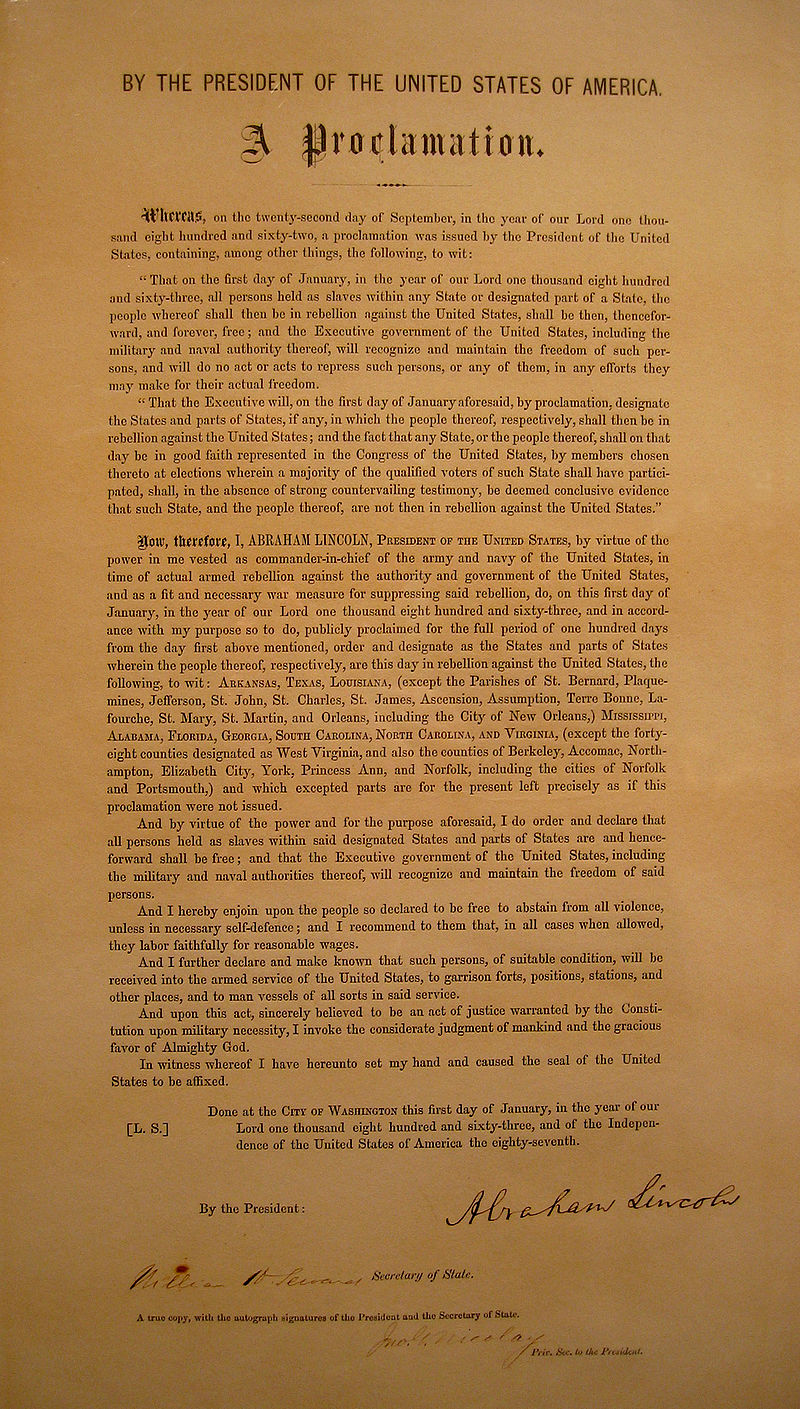
"The president additionally possesses the ability to direct much of the executive branch through executive orders that are grounded in federal law or constitutionally granted executive power. Executive orders are reviewable by federal courts and can be superseded by federal legislation. United States presidents issue executive orders to help officers and agencies of the executive branch manage the operations within the federal government itself. Executive orders have the full force of law when they take authority from a legislative power which grants its power directly to the Executive by the Constitution, or are made pursuant to Acts of Congress that explicitly delegate to the President some degree of discretionary power. Like both legislative statutes and regulations promulgated by government agencies, executive orders are subject to judicial review, and may be struck down if deemed by the courts to be unsupported by statute or the Constitution. Major policy initiatives require approval by the legislative branch, but executive orders have significant influence over the internal affairs of government, deciding how and to what degree legislation will be enforced, dealing with emergencies, waging wars, and in general fine-tuning policy choices in the implementation of broad statutes. There is no constitutional provision or statute that explicitly permits executive orders. The term executive power in Article II, Section 1, Clause 1 of the Constitution refers to the office of President as the executive. They are instructed therein by the declaration "take Care that the Laws be faithfully executed" made in Article II, Section 3, Clause 5 or face impeachment. Most executive orders use these Constitutional reasonings as the authorization allowing for their issuance to be justified as part of the President's sworn duties, the intent being to help direct officers of the U. S. Executive carry out their delegated duties as well as the normal operations of the federal government: the consequence of failing to comply possibly being removal from office. An executive order of the president must find support in the Constitution, either in a clause granting the president specific power, or by a delegation of power by Congress to the president. The Office of the Federal Register is responsible for assigning the executive order a sequential number after receipt of the signed original from the White House and printing the text of the executive order in the daily Federal Register and Title 3 of the Code of Federal Regulations. With the exception of William Henry Harrison, all presidents beginning with George Washington in 1789 have issued orders that in general terms can be described as executive orders. Initially they took no set form. Consequently, such orders varied as to form and substance. The most famous executive order was by President Abraham Lincoln when he issued the Emancipation Proclamation [pictured left above] on January 1, 1863. Large policy changes with wide-ranging effects have been implemented through executive order, including the racial integration of the armed forces under Harry Truman and the desegregation of public schools under Dwight D. Eisenhower. The Heritage Foundation has accused presidents of abusing executive orders by using them to make laws without Congressional approval and moving existing laws away from their original mandates."
Source: Wikipedia.org, Monday, January 30, 2017 |
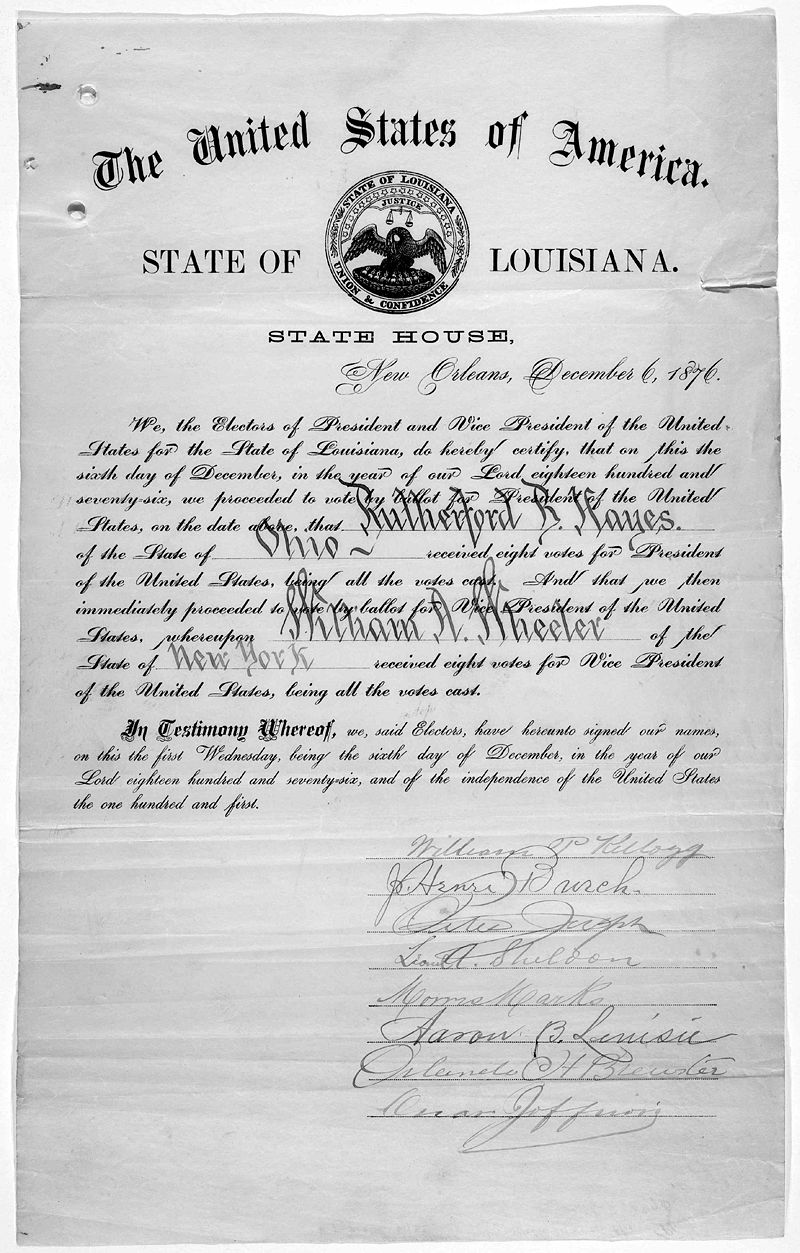
"Indirect election is a process in which voters in an election do not choose between candidates for an office but rather elect persons who will then make the choice. It is one of the oldest forms of elections and is still used today for many upper houses and presidents. The election of the United States President and the Vice President is indirect election. Voters elect the electoral college, which then elects the President. The president is elected indirectly. A number of electors, collectively known as the Electoral College, officially select the president. On Election Day, voters in each of the states and the District of Columbia cast ballots for these electors. Each state is allocated a number of electors, equal to the size of its delegation in both Houses of Congress combined. Generally, the ticket that wins the most votes in a state wins all of that state's electoral votes and thus has its slate of electors chosen to vote in the Electoral College. The winning slate of electors meet at its state's capital on the first Monday after the second Wednesday in December, about six weeks after the election, to vote. They then send a record of that vote to Congress. The vote of the electors is opened by the sitting vice president—acting in that role's capacity as President of the Senate—and read aloud to a joint session of the incoming Congress, which was elected at the same time as the president. Territories of the United States, such as Puerto Rico, the Northern Mariana Islands, the U. S. Virgin Islands, American Samoa, and Guam, are not entitled to electors in presidential elections. Constitutionally, only U. S. states (per Article II, Section 1, Clause 2) and Washington, D. C. (per the Twenty-third Amendment) are entitled to electors. Guam has held non-binding straw polls for president since the 1980s to draw attention to this fact. This means that roughly 4 million Americans do not have the right to vote in presidential elections. Various scholars consequently conclude that the U. S. national-electoral process is not fully democratic. Each state gets a minimum of three electoral votes, regardless of population, which gives low-population states a disproportionate vote share. By giving more per capita voting power to the less populated states, the Electoral College gives extra power to voters in those states. For example, an electoral vote represents nearly four times as many people in California as in Wyoming. Sparsely populated states are likely to be increasingly overrepresented in the electoral college over time, because Americans are increasingly moving to big cities, most of which are in big states. The closest the United States has come to abolishing the Electoral College occurred during the 91st Congress, 1969–1971. The presidential election of 1968 resulted in Richard Nixon receiving 301 electoral votes, Hubert Humphrey 191 and George Wallace 46. However, Nixon had only received 511,944 more popular votes than Humphrey, 43.5% to 42.9%, less than 1% of the national total. On January 5, 2017, Representative Steve Cohen introduced a joint resolution proposing a constitutional amendment that would replace the Electoral College with the popular election of the President and Vice President. Unlike the Bayh–Celler amendment 40% threshold for election, Cohen's proposal only requires a candidate to have the "greatest number of votes" to be elected. Elections where the winning candidate loses the national popular vote typically result when the winner builds the requisite configuration of states (and thus captures their electoral votes) by small margins, but the losing candidate secures large voter margins in the remaining states. In this case, the very large margins secured by the losing candidate in the other states would aggregate to a plurality of the ballots cast nationally. However, commentators question the legitimacy of this national popular vote; pointing out that the national popular vote observed under the Electoral College system does not reflect the popular vote observed under a National Popular Vote system; as each electoral institution produces different incentives for, and strategy choices by, presidential campaigns. Because the national popular vote is irrelevant under the electoral college system, it is generally presumed candidates base their campaign strategies around the existence of the Electoral College; any close race has candidates campaigning to maximize electoral votes by focusing their get-out-the-vote efforts in crucially needed swing states and not attempting to maximize national popular vote totals by using limited campaign resources to run up margins or close up gaps in states considered "safe" for themselves or their opponents, respectively. Conversely, the institutional structure of a national popular vote system would encourage candidates to pursue voter turnout wherever votes could be found, even in "safe" states they are already expected to win, and in "safe" states they have no hope of winning. The United States is the only country that elects a politically powerful president via an electoral college and the only one in which a candidate can become president without having obtained the highest number of votes in the sole or final round of popular voting."
Source: Wikipedia.org, Monday, January 30, 2017 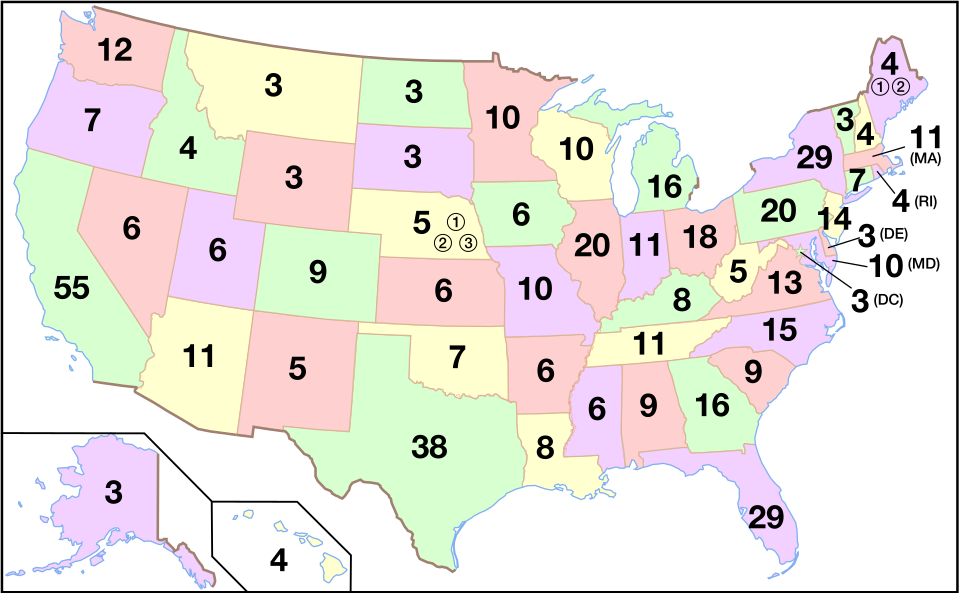
"An electoral college is a set of electors who are selected to elect a candidate to a particular office. Often these represent different organizations, political parties, or entities, with each organization, political party or entity represented by a particular number of electors or with votes weighted in a particular way. Many times, though, the electors are simply important people whose wisdom would ideally provide a better choice than a larger body. The system can ignore the wishes of a general membership. In the Church, both the clergy and laity elected the bishop or presiding presbyter. However, for various reasons, such as a desire to reduce the influence of the state or the laity in ecclesiastical matters, electoral power became restricted to the clergy and, in the case of the Church in the West, exclusively to a college of the canons of the cathedral church. In the Pope's case, the system of people and clergy was eventually replaced by a college of the important clergy of Rome, which eventually became known as the College of Cardinals. Since 1059, it has had exclusive authority over papal selection. Countries with complex regional electorates may elect a head of state by means of an electoral college rather than a direct popular election. The United States Electoral College is an example of a system in which an executive president is indirectly elected, with electors representing the 50 states and the federal district. Each state has a number of electors equal to its Congressional representation (in both houses), with the non-state District of Columbia receiving three electors and other non-state territories having no electors. The electors generally cast their votes for the winner of the popular vote in their respective states. However, there are several states where this is not required by law. In the United States, 270 electoral votes are currently required to win the presidential election. The map above highlights the, "number of electors from each state for the 2012, 2016 and 2020 presidential elections. 12 electoral votes changed between 18 states, based on the 2010 census. Eight states lost one electoral vote and two (New York & Ohio) each lost two electoral votes. Eight states gained electoral votes, six gained one electoral vote, Florida gained two & Texas gained four. The total U. S. population as of January 27, 2017, 324,438,000."
Source: Wikipedia.org, Monday, January 30, 2017 |
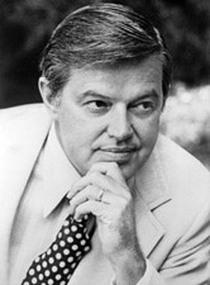 "Find A Grave Memorial ID 12106" "Find A Grave Memorial ID 12106"
"Frank Forrester Church III (July 25, 1924–April 7, 1984) was an American lawyer and politician. A member of the Democratic Party, he served as a United States Senator from Idaho from 1957 to 1981. Church was an unsuccessful candidate for the Democratic nomination in the 1976 presidential election, losing to Jimmy Carter. He is known for heading the Church Committee, which investigated abuses in the U. S. intelligence agencies. Born and raised in Boise, Idaho, Church was the younger of the two sons of Frank (II) and Laura Bilderback Church. His father co-owned a sporting goods store and took the sons on fishing, hunting, and hiking outings in the Idaho mountains. The family was Catholic and conservative, and Frank III attended St. Joseph's School as a youngster, where he went by the nickname "Frosty." His older brother Richard became a career officer in the U. S. Marines Corps, and retired as a colonel. Three years after leaving the Senate, Church was hospitalized for a pancreatic tumor on January 12, 1984. Less than three months later, he died at his home in Bethesda, Maryland, on April 7 at age 59. A memorial service was held at the National Cathedral in Washington, D. C. and then his body was flown home to Idaho, where he lay in state beneath the rotunda of the Idaho State Capitol. His funeral was held in downtown Boise at the Cathedral of the Rockies on April 12 and televised throughout Idaho. Church was buried at Morris Hill Cemetery near his boyhood hero, Senator William Borah. His parents and paternal grandparents are also buried at Morris Hill, in the St. John's Catholic section. His maternal grandparents are buried across town in the Pioneer Cemetery, as are the Bayhouse great-grandparents. Church received an honorary doctorate from Pennsylvania's Elizabethtown College in 1983 to honor his work for the American people during his career in public office. His papers, originally given to his alma mater Stanford University in 1981, were transferred to Boise State University at his request in 1984. As of 2016, Church was the last Democrat to serve in the U. S. Senate from Idaho. Church was stunned by what the Church Committee learned about the immense operations and electronic monitoring capabilities of the National Security Agency (NSA), an agency whose existence was unknown to most Americans at the time. Church stated in 1975, "That capability at any time could be turned around on the American people, and no American would have any privacy left, such is the capability to monitor everything: telephone conversations, telegrams, it doesn't matter. There would be no place to hide." He is widely quoted as also stating regarding the NSA, "I don't want to see this country ever go across the bridge... I know the capacity that is there to make tyranny total in America, and we must see to it that this agency and all agencies that possess this technology operate within the law and under proper supervision, so that we never cross over that abyss. That is the abyss from which there is no return." Commentators such as U. S. constitutional lawyer and columnist Glenn Greenwald have praised Church for his prescient warning regarding this turning around by the NSA to monitor the American people, arguing that the NSA undertook such a turning in the years after the September 11 Attacks."
Source: Wikipedia.org | Friday, March 17, 2017, 6:00PM 
"The United States Foreign Intelligence Surveillance Court (FISC, also called the FISA Court) is a U. S. federal court established and authorized under the Foreign Intelligence Surveillance Act of 1978 (FISA) to oversee requests for surveillance warrants against foreign spies inside the United States by federal law enforcement and intelligence agencies. Such requests are made most often by the National Security Agency (NSA) and the Federal Bureau of Investigation (FBI). Congress created FISA and its court as a result of the recommendations by the U. S. Senate's Church Committee. Its powers have evolved to the point that it has been called "almost a parallel Supreme Court." Since 2009, the court has been relocated to the E. Barrett Prettyman United States Courthouse in Washington, D. C. For roughly thirty years of its history (prior to 2009), it was housed on the sixth floor of the Robert F. Kennedy Department of Justice Building. In 2013, a top-secret order issued by the court, which was later leaked to the media from documents culled by Edward Snowden, required a subsidiary of Verizon to provide a daily, on-going feed of all call detail records–including those for domestic calls–to the NSA. Each application for one of these surveillance warrants (called a FISA warrant) is made before an individual judge of the court. The court may allow third parties to submit briefs as amici curiae. When the U. S. Attorney General determines that an emergency exists, the Attorney General may authorize the emergency employment of electronic surveillance before obtaining the necessary authorization from the FISC, if the Attorney General or their designee notifies a judge of the court at the time of authorization and applies for a warrant as soon as practicable but not more than 7 days after authorization of such surveillance, as required by 50 U.S.C. § 1805. If an application is denied by one judge of the court, the federal government is not allowed to make the same application to a different judge of the court, but may appeal to the United States Foreign Intelligence Surveillance Court of Review. Such appeals are rare: the first appeal from the FISC to the Court of Review was made in 2002 (In re Sealed Case No. 02-001), 24 years after the founding of the court. Also rare is for FISA warrant requests to be turned down. During the 25 years from 1979 to 2004, 18,742 warrants were granted, while only 4 were rejected. Fewer than 200 requests had to be modified before being accepted, almost all of them in 2003 and 2004. The four rejected requests were all from 2003, and all four were partially granted after being submitted for reconsideration by the government. Of the requests that had to be modified, few were before the year 2000. During the next eight years, from 2004 to 2012, there were over 15,100 additional warrants granted, and another 7 being rejected. Over the entire 33-year period, the FISA court granted 33,942 warrants, with only 12 denials – a rejection rate of 0.03 percent of the total requests. This does not include the number of warrants that were modified by the FISA court. This can cause a phenomenon called "confirmation bias" which, due to such a high approval rate of warrants, can lead to over rationalization of information by the government on targeted individuals. For example, certain characteristics like ethnicity and religion combined with probable can cause the FBI to dig into the background of an individual until anything remotely suspicious comes up, even if there's clear-cut evidence that the person is innocent. Because of the sensitive nature of its business, the court is a "secret court" its hearings are closed to the public. While records of the proceedings are kept, they also are unavailable to the public, although copies of some records with classified information redacted have been made public. Due to the classified nature of its proceedings, usually only attorneys licensed to practice in front of the US government are permitted to appear before the court. Because of the nature of the matters heard before it, court hearings may need to take place at any time of day or night, weekdays or weekends; thus, at least one judge must be "on call" at all times to hear evidence and decide whether or not to issue a warrant. A heavily redacted version of a 2008 appeal by Yahoo! of an order issued with respect to NSA's PRISM program had been published for the edification of other potential appellants. The identity of the appellant was declassified in June 2013."
Source: Wikipedia.org | Friday, March 17, 2017, 6:00PM 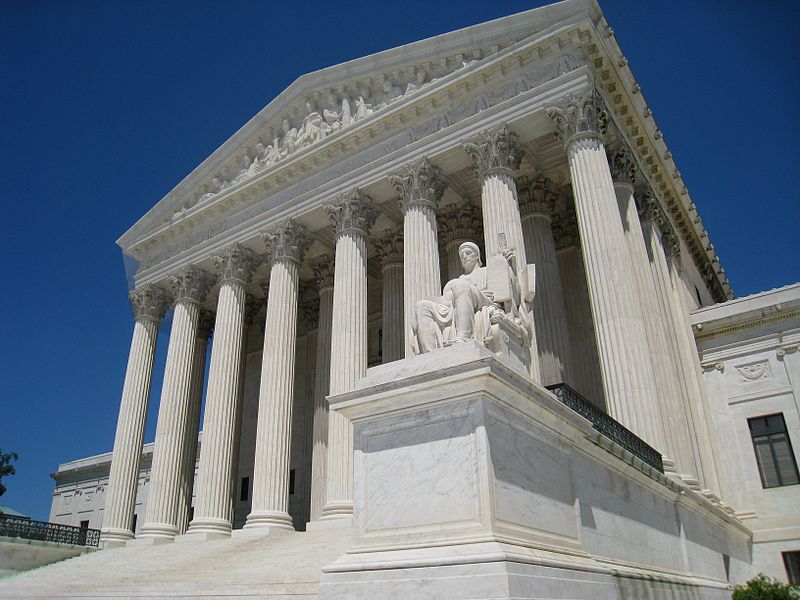
"The Supreme Court of the United States is the highest federal court of the United States. Established pursuant to Article III of the United States Constitution in 1789, it has ultimate appellate jurisdiction over all federal courts and over state court cases involving issues of federal law, plus original jurisdiction over a small range of cases. In the legal system of the United States, the Supreme Court is the final interpreter of federal constitutional law, although it may only act within the context of a case in which it has jurisdiction. The Court normally consists of the Chief Justice of the United States and eight associate justices who are nominated by the President and confirmed by the Senate. Once appointed, justices have life tenure unless they resign, retire, or are removed after impeachment. In modern discourse, the justices are often categorized as having conservative, moderate, or liberal philosophies of law and of judicial interpretation. Each justice has one vote, and while many cases are decided unanimously, the highest profile cases often expose ideological beliefs that track with those philosophical or political categories. The Court meets in the Supreme Court Building in Washington, D. C. The ratification of the United States Constitution established the Supreme Court in 1789. Its powers are detailed in Article Three of the Constitution. The Supreme Court is the only court specifically established by the Constitution, and all the others were created by Congress. Congress is also responsible for conferring the title "justice" upon the associate justices, who have been known to scold lawyers for instead using the term "judge," which is the term used by the Constitution. The Court first convened on February 2, 1790, by which time five of its six initial positions had been filled. Article III of the United States Constitution does not specify the number of justices. The Judiciary Act of 1789 called for the appointment of six justices, and as the nation's boundaries grew, Congress added justices to correspond with the growing number of judicial circuits, seven in 1807, nine in 1837, and ten in 1863. In 1866, at the behest of Chief Justice Chase, Congress passed an act providing that the next three justices to retire would not be replaced, which would thin the bench to seven justices by attrition. Consequently, one seat was removed in 1866 and a second in 1867. In 1869, however, the Circuit Judges Act returned the number of justices to nine, where it has since remained. There are currently three living retired justices of the Supreme Court of the United States, John Paul Stevens, Sandra Day O'Connor, and David Souter. As retired justices, they no longer participate in the work of the Supreme Court, but may be designated for temporary assignments to sit on lower federal courts, usually the United States Courts of Appeals. Such assignments are formally made by the Chief Justice, on request of the Chief Judge of the lower court and with the consent of the retired Justice. In recent years, Justice O'Connor has sat with several Courts of Appeals around the country, and Justice Souter has frequently sat on the First Circuit, the court of which he was briefly a member before joining the Supreme Court. Justices sometimes strategically plan their decisions to leave the bench, with personal, institutional, and partisan factors playing a role. The fear of mental decline and death often motivates justices to step down. The desire to maximize the Court's strength and legitimacy through one retirement at a time, when the Court is in recess, and during non-presidential election years suggests a concern for institutional health. Finally, especially in recent decades, many justices have timed their departure to coincide with a philosophically compatible president holding office, to ensure that a like-minded successor would be appointed. Each Supreme Court justice hires several law Clerks to review petitions for writ of certiorari, research them, prepare bench memorandums, and draft opinions. Associate justices are allowed four clerks. The chief justice is allowed five clerks, but Chief Justice Rehnquist hired only three per year, and Chief Justice Roberts usually hires only four. Generally, law clerks serve a term of one to two years. The first female clerk was Lucile Lomen, hired in 1944 by Justice William O. Douglas. The first African-American, William T. Coleman, Jr., was hired in 1948 by Justice Felix Frankfurter. A disproportionately large number of law clerks have obtained law degrees from elite law schools, especially Harvard, Yale, the University of Chicago, Columbia, and Stanford. From 1882 to 1940, 62% of law clerks were graduates of Harvard Law School. Those chosen to be Supreme Court law clerks usually have graduated in the top of their law school class and were often an editor of the law review or a member of the moot court board. By the mid-1970s, clerking previously for a judge in a federal court of appeals had also become a prerequisite to clerking for a Supreme Court justice."
|
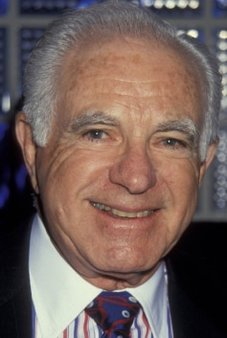 “Find A Grave Memorial ID 176759437” “Find A Grave Memorial ID 176759437”
"Joseph Albert Wapner, Jr. (November 15, 1919–February 26, 2017) was an American judge and television personality. He was the first star of the ongoing reality courtroom series The People's Court. The court show's first run in syndication, with Wapner presiding as judge, lasted from 1981 to 1993, for 12 seasons and 2,484 episodes. While the show's second run has been presided over by multiple judges, Wapner was the sole judge to preside during the court show's first run. Wapner's tenure on the program made him the first jurist of arbitration-based reality court shows, what is now a most popular trend in the judicial genre. Until the summer of 2013, Wapner also held the title of longest reigning arbiter over The People's Court. However, by completion of the court show's 2012–2013 season, Marilyn Milian captured this title from him and became the longest-reigning judge over the series. Five years after presiding over The People's Court, Wapner returned to television as a judge on the nontraditional courtroom series, Judge Wapner's Animal Court, lasting for two seasons (1998–1999 and 1999–2000). Joseph Albert Wapner was born November 15, 1919, in Los Angeles to Jewish parents. His father, Max Wapner, an attorney, immigrated to California from Romania, while his mother, Fannie Friedman was from Russia. He had a younger sister, Irene. Wapner attended Hollywood High School and dated actress Lana Turner once while in high school. Wapner was a graduate of the University of Southern California (1941) and the USC Law School (1948), serving in World War II in between. Wapner was awarded the Purple Heart and the Bronze Star while serving in the South Pacific in Cebu. He was honorably discharged from the United States Army as a lieutenant. Appointed by Governor Pat Brown to the Los Angeles Municipal Court in 1959, Wapner served two years before being elevated to the Los Angeles County Superior Court, where he served for 18 years before retiring. While serving on the Superior Court bench, Wapner also served as presiding judge in 1969 and 1970. Wapner was president of the California Judges Association in 1975 and 1976. He retired from the court November 16, 1979. After 12 seasons on The People's Court, it was announced that Wapner was not invited back to the court show in 1993, when the ratings had dropped to an all-time low. After a four-year hiatus, beginning in 1993, The People's Court returned to the air in 1997, though without Wapner, and still runs today. Wapner has stated that he was told years later that the show did not want to hurt his feelings; however, he stated that this is exactly what the show did. Wapner also stated that he was not notified when the producers decided to revamp the series. He declined to offer any opinions on the People's Court judges who succeeded him, as he never watched the revamped program. On November 12, 2009, Wapner received a star on the Hollywood Walk of Fame. Judith Sheindlin of the television court show, Judge Judy and he were the only two television jurists who have received the honor as of 2009. Wapner was critical of Sheindlin. On November 13, 2009, in honor of his 90th birthday on November 15, Wapner made a one-time-only return to the court show, acting as a guest judge, presiding over a case in the current Marilyn Milian era of The People's Court. Since around 2010, the soda company Rocket Fizz has marketed a "Judge Wapner Root Beer" drink, featuring the slogan "I sentence you to drink my root beer." Wapner was active in Jewish causes, including sitting on the board of a Jewish school. Wapner married his wife, Mildred Nebenzahl, in 1946. Their daughter Sarah died from heart disease in May 2015, aged 56. They also had two sons who became attorneys, David Miron-Wapner and Fred Wapner, who also became a judge. The elder Wapner died on February 26, 2017 at his home in Los Angeles, aged 97."
Source: ABC News, Sunday, February 26, 2017, 5:00PM-5:30PM | Wikipedia.org 8:15PM CDT 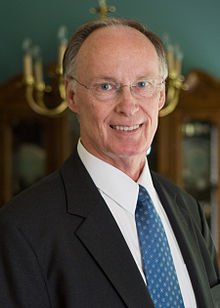
"Robert Julian Bentley (born February 3, 1943) is an American politician and medical doctor who was the 53rd Governor of Alabama from 2011 until 2017. A member of the Republican Party, Bentley was elected Governor in 2010 and reelected in 2014. Bentley resigned on April 10, 2017 due to scandals. Born in Columbiana, Alabama, Bentley served in the United States Air Force as general medical officer at Pope Air Force Base in Fayetteville, North Carolina from 1969 to 1975, leaving with the rank of a Captain. He earned his M. D. from the University of Alabama School of Medicine before entering private practice and opening a series of dermatology clinics throughout the southern United States. On April 5, 2016, Republican State Representative Ed Henry filed an impeachment resolution against Bentley in the State Legislature, in connection with allegations that Bentley engaged in an extramarital affair with a female political adviser. Bentley has admitted to making inappropriate remarks toward the woman, but denied having a physical affair. On July 7, 2016, the House Judiciary Committee named a special counsel to lead the investigation into the impeachment charges against the governor. On April 5, 2017, the Ethics Commission found probable cause that Bentley violated both ethics and campaign finance laws. Bentley resigned as governor of Alabama on April 10, 2017, effective immediately, after pleading guilty to two misdemeanor charges related to campaign finance law. Bentley allegedly used state resources to facilitate and conceal an extramarital affair with an former staffer. He was succeeded by Lieutenant Governor Kay Ivey. Bentley is a native of Columbiana, Alabama, in Shelby County. His parents, Mattie Boyd Vick and David Harford Bentley, did not complete school past junior high. Bentley's father was a sawmill worker who voted with the Populist Republicans, a splinter branch of the Republican Party formed by people who had been part of the state's defunct populist movement. At one point, Bentley lived in a house with no electricity or running water. After graduating from Shelby County High School at the top of his class, Bentley enrolled at the University of Alabama in Tuscaloosa. While at Alabama, Bentley majored in Chemistry and Biology and graduated with his Bachelor of Science degree in three years. From an early age, Robert Bentley wanted to become a physician. After graduating from UA, he began his studies at The University of Alabama School of Medicine. During his first year of medical school, he met Martha Dianne Jones of Montgomery. They were married on July 24, 1965. He graduated with his M. D. in 1968 and began his one-year internship at Carraway Methodist Hospital in Birmingham. On April 10, 2017, on the same day that the state legislature began impeachment proceedings Bentley resigned as governor of Alabama. On the same day, Bentley pleaded guilty to two misdemeanor charges, one for failing to file a major contribution report and the other for knowingly converting campaign contributions for personal use. Both charges related to Bentley's concealment of the alleged affair. He was booked at the Montgomery County Jail and on the same day was sentenced by Montgomery County Judge Troy Massey to a suspended sentence of 30 days in jail, allowing him to avoid jail time, as well as one year of probation and 100 hours of community service, to be performed under Bentley's role as a physician. The judge said that Bentley's probation could be terminated early "if he meets conditions of the plea deal, including refunding his campaign account nearly $9,000 and surrendering his account worth $37,000, to the state within a week." The guilty plea was part of an plea agreement with the Alabama attorney general's office, under which Bentley pleaded guilty to misdemeanor charges "in an effort to avoid felony charges and potential jail time." Bentley was the fourth Alabama governor to resign from office. He was succeeded by Lieutenant Governor Kay Ivey, who was sworn into office the day Bentley resigned. Bentley and his former wife Dianne have four sons and six granddaughters and one grandson. He was an active member of First Baptist Church Tuscaloosa where he served as a deacon and a Sunday School teacher. At FBC Tuscaloosa, he has been the chairman of the board of deacons four times and a member of the Youth for Christ advisory board as well as the Family Counseling advisory board. As governor, he serves on the board of trustees for the colleges and universities of Alabama. He is also on the board of trustees of the Alabama Medical Education Consortium, which he helped to found. Bentley was the 2009 recipient of the Christian Coalition of Alabama’s Statesmanship Award. In August 2015, Dianne Bentley filed to divorce Gov. Bentley, saying there had been an "irretrievable breakdown" in their marriage and that further attempts at reconciliation were impossible. Records of the divorce case were sealed, per a ruling on August 31, 2015, by County Circuit Judge Elizabeth Hamner. Governor Bentley had appointed Tuscaloosa County Circuit Judge Elizabeth Hamner to the bench and her current position in 2011. The divorce was finalized on September 29, 2015."
|
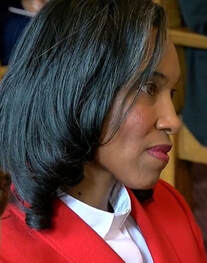
"Tracie Hunter is an American pastor in the Western Hills Church of the United Brethren in Christ, lawyer and formerly a judge in Hamilton County, Ohio. Tracie Hunter was born in Cincinnati, Ohio in 1967, to parents Charlotte and Stephen "Steven" Edward Hunter Sr, who raised their children, Tracie, Edward Louis, Erica, and Stephen Edward Jr., Catholic. She was the eldest of the four siblings. In 1986, [17-year-old] Edward Louis, while a high school student, committed a string of armed robberies that ended in a confrontation with the police, and Edward Louis shooting himself. Hunter completed her undergraduate education at Miami University, and earned a Juris Doctor professional degree from the University of Cincinnati College of Law. Hunter was admitted to the Ohio bar in 1993. She started working as an attorney advocate for neglected children and as a contract attorney with a public defender's office. At the same time, she worked as the general manager of the WCVG urban, gospel, radio station. Chaos erupted inside a Cincinnati courtroom on Monday as a former judge — convicted of using her position to help a family member — was dragged away to jail by a bailiff. Tracie Hunter, once a juvenile court judge, has been fighting her 2014 conviction and sixth-month sentence for improperly passing on information to her brother in a job dispute. And on Monday, after several appeals were exhausted, Hamilton County Common Pleas Judge Patrick Dinkelacker detailed the numerous letters and
|
recommendations he's received, urging him to not put Hunter behind bars. But when Dinkelacker announced that he wasn't moved and ordered Hunter to be taken into custody, the defendant's supporters shouted their disapproval. One of them was stopped and arrested as she tried to reach the defense table. Hunter went limp and a bailiff lifted the former judge, wearing a black dress and white bolero, by her underarms and dragged her away. The supporter, wearing a black T-shirt with the words "Justice for Judge Tracie M. Hunter," was handcuffed and taken away. The case stems from the former judge's brother, Stephen Hunter, who worked as a youth corrections officer. Stephen Hunter allegedly struck a young offender on the job on July 7, 2013, leading to the officer's boss to recommend his firing. Tracie Hunter improperly demanded and received documents about the teen and passed them on to her brother, prosecutors said. Tracie Hunter, who in 2010 became the first African American elected to Hamilton County's Juvenile Court, has always insisted her prosecution was politically motivated. "I violated no laws, I did not secure a public contract, I did not secure employment for my brother who worked for the court for about seven years before I was elected judge. They need to drop these unrighteous and I believe unlawful charges against me," Hunter told NBC affiliate WLWT in Cincinnati on Sunday. In October 1987, while a senior at Miami University, Hunter was involved in a car accident that left her with "serious" head and facial injuries, and both legs temporarily paralyzed. She eventually recovered and, by January 1988, she was back at the university. She took 34 academic credit-hours in one semester and graduated on time. Hunter is a pastor of the Western Hills Brethren [in] Christ Church."
Source: NBC News July 22, 2019 | Wikipedia.org | Monday, January 15, 2024, 7:00 PM CDT |

ClassicShoppes.us
~Where Class & Distinction Meets~
~Where Class & Distinction Meets~
