 1525-1866 1525-1866
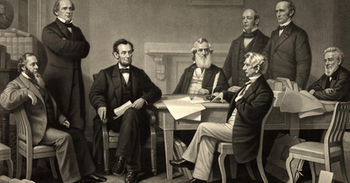
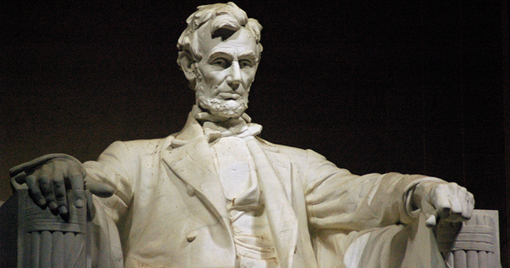
"The Emancipation Proclamation was a presidential proclamation and executive order issued by President Abraham Lincoln on January 1, 1863. In a single stroke, it changed the federal legal status of more than 3 million enslaved persons in the designated areas of the South from "slave" to "free." It had the practical effect that as soon as a slave escaped the control of the Confederate government, by running away or through advances of federal troops, the slave became legally free. Eventually it reached and liberated all of the designated slaves. It was issued as a war measure during the American Civil War, directed to all of the areas in rebellion and all segments of the executive branch (including the Army and Navy) of the United States. It proclaimed the freedom of slaves in the ten states that were still in rebellion.
|
Because it was issued under the President's war powers, it necessarily excluded areas not in rebellion-it applied to more than 3 million of the 4 million slaves in the U. S. at the time. The Proclamation was based on the president's constitutional authority as commander-in-chief of the armed forces; it was not a law passed by Congress. The Proclamation also ordered that suitable persons among those freed could be enrolled into the paid service of United States' forces, and ordered the Union Army (and all segments of the Executive branch) to "recognize and maintain the freedom of" the ex-slaves. The Proclamation did not compensate the owners, did not outlaw slavery, and did not grant citizenship to the ex-slaves (called freedmen). It made the eradication of slavery an explicit war goal, in addition to the goal of reuniting the Union. Around 20,000 to 50,000 slaves in regions where rebellion had already been subdued were immediately emancipated."
|
|
"In the United States, a federal holiday is an authorized holiday which has been recognized by the US government. Every year on a US federal holiday, non-essential federal government offices are closed, and every federal employee is paid for the holiday. Private-sector employees required to work on a legal holiday may receive holiday pay in addition to their ordinary wages. Federal holidays are designated by the United States Congress in Title V of the United States Code (5 U.S.C. § 6103) Congress has authority to create holidays only for federal institutions (including federally owned properties) and employees, and for the District of Columbia. However, as a general rule other institutions, including banks, post offices, and schools, may be closed on those days. In various parts of the country, state and city holidays may be observed in addition to the federal holidays. Most of the eleven U. S. federal holidays are also state holidays. A holiday that falls on a weekend is usually observed on the closest weekday. The official names came from the laws that define holidays for federal employees."
|

Memorial Day
|
"Memorial Day is a federal holiday in the United States for remembering the people who died while serving in the country's armed forces. The holiday, which is observed every year on the last Monday of May, originated as Decoration Day after the American Civil War in 1868, when the Grand Army of the Republic, an organization of Union veterans—established it as a time for the nation to decorate the graves of the war dead with flowers. By the 20th century, competing Union and Confederate holiday traditions, celebrated on different days, had merged, and Memorial Day eventually extended to honor all Americans who died while in the military service. It typically marks the start of the summer vacation season, while Labor Day marks its end. Many people visit cemeteries and memorials, particularly to honor those who have died in military service. Many volunteers place an American flag on each grave in national cemeteries. Memorial Day is not to be confused with Veterans Day; Memorial Day is a day of remembering the men and women who died while serving, while Veterans Day (below) celebrates the service of all U. S. military veterans."
|
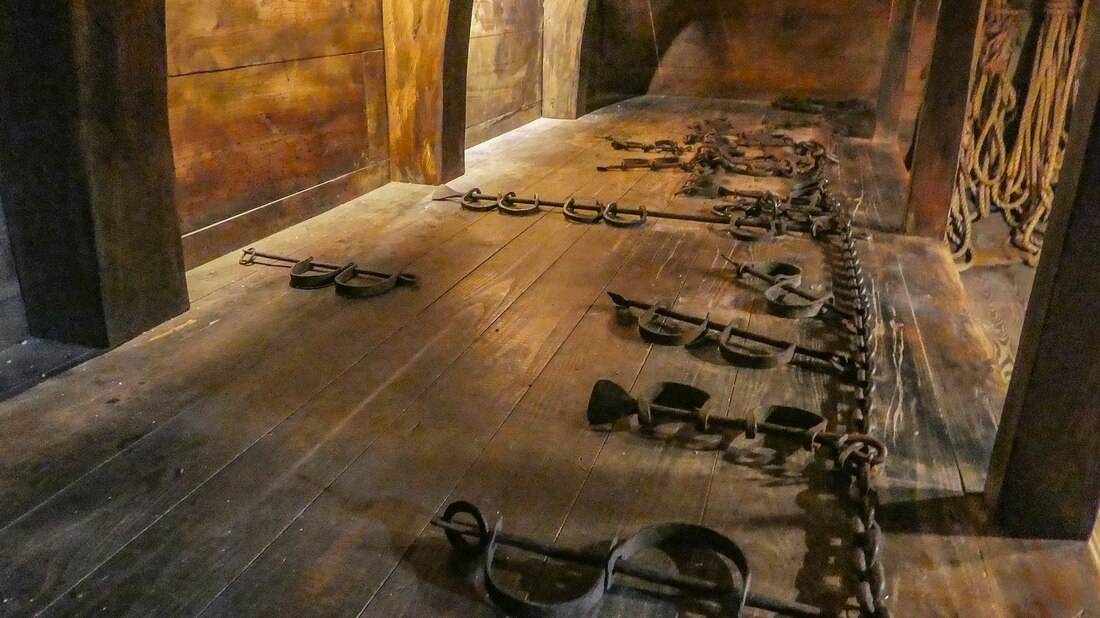
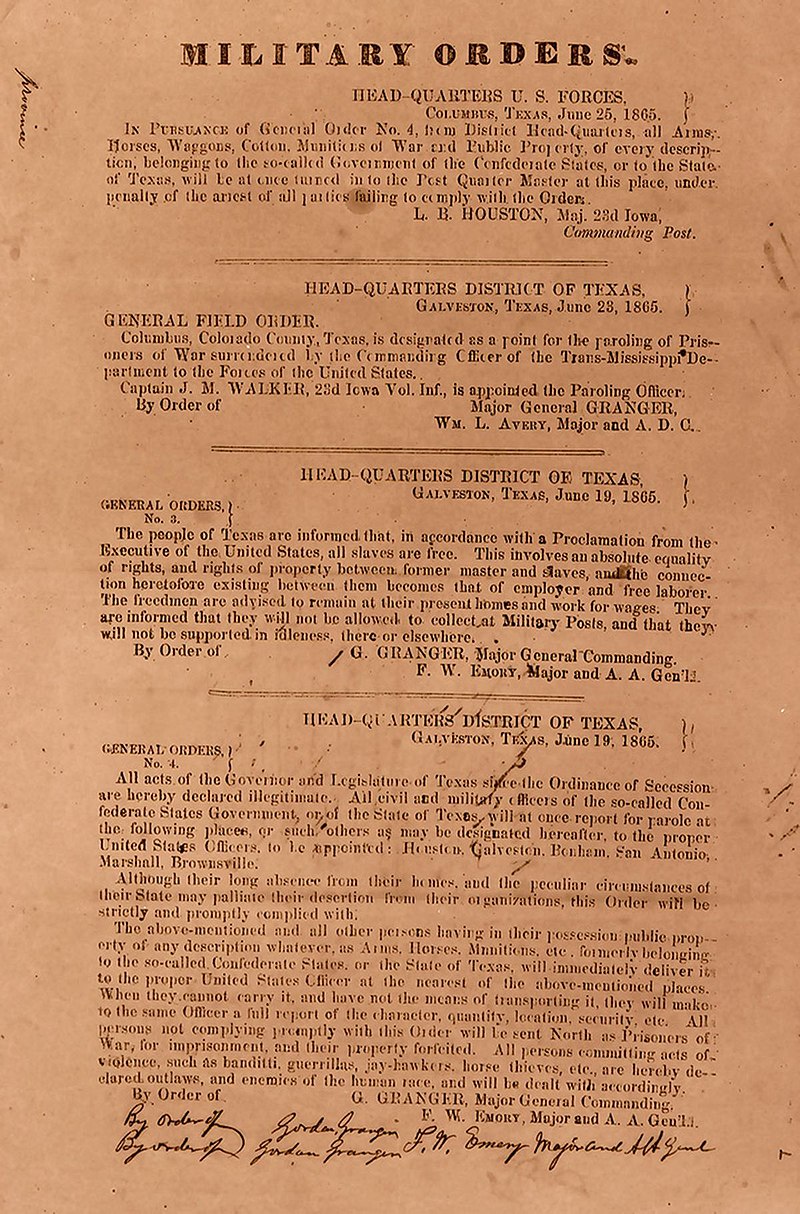
"Juneteenth is [now] a federal holiday in the United States commemorating the emancipation of enslaved African Americans. Deriving its name from combining "June" and "nineteenth," it is celebrated on the anniversary of the order, issued by Major General Gordon Granger on June 19, 1865, proclaiming freedom for slaves in Texas. Originating in Galveston, Juneteenth has since been observed annually in various parts of the United States, often broadly celebrating African-American culture. The day was first recognized as a federal holiday in 2021, when President Joe Biden signed the Juneteenth National Independence Day Act into law after the efforts of Lula Briggs Galloway, Opal Lee, and others. Early celebrations date to 1866, at first involving church-centered community gatherings in Texas. They spread across the South and became more commercialized in the 1920s and 1930s, often centering on a food festival. Participants in the Great Migration brought these celebrations to the rest of the country. During the Civil Rights Movement of the 1960s, these celebrations were eclipsed by the nonviolent determination to achieve civil
|
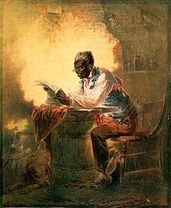
rights, but grew in popularity again in the 1970s with a focus on African American freedom and African-American arts. Beginning with Texas by proclamation in 1938, and by legislation in 1979, every U. S. state and the District of Columbia has formally recognized the holiday in some way. With its adoption in parts of Mexico, the holiday has become an international holiday. Juneteenth is celebrated by the Mascogos, descendants of Black Seminoles who escaped from slavery in 1852 and settled in Coahuila, Mexico. Celebratory traditions often include public readings of the Emancipation Proclamation, singing traditional songs such as "Swing Low, Sweet Chariot" and "Lift Every Voice and Sing," and the reading of works by noted African-American writers, such as Ralph Ellison and Maya Angelou. Juneteenth celebrations may also include rodeos, street fairs, cookouts, family reunions, parties, historical reenactments, and Miss Juneteenth contests. In 2021, Juneteenth became the first new federal holiday since Martin Luther King Jr. Day was adopted in 1983."
Source: Wikipedia.org | Sunday, May 28, 2023, 9:00 AM CDT |
Columbus Day
|
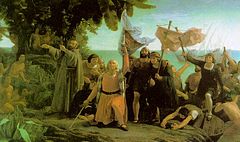
"Many countries in the New World and elsewhere officially celebrate as a holiday the anniversary of Christopher Columbus' arrival in the Central America, which happened on October 12, 1492. The landing is celebrated as Columbus Day in the United States, as Discovery Day in the Bahamas, as Día de la Raza ("Day of the Race") in many countries in Latin America. These holidays have been celebrated unofficially since the late 18th century and officially in various areas since the early 20th century. Columbus Day first became an official state holiday in Colorado in 1906, and became a federal holiday in the United States in 1937, though people have celebrated Columbus's voyage since the colonial period. In 1792, New York City and other U. S. cities celebrated the 300th anniversary of his landing in the New World. President Benjamin Harrison called upon the people of the United States to celebrate Columbus Day on the 400th anniversary of the event. During the four hundredth anniversary in 1892, teachers, preachers, poets and politicians used Columbus Day rituals to teach ideals of patriotism. The first statewide Columbus Day holiday was proclaimed by Colorado governor Jesse F. McDonald in 1905, and it was made a statutory holiday in 1907. In April 1934, as a result of lobbying by the Knights of Columbus and New York City Italian leader Generoso Pope, Congress and President Franklin Delano Roosevelt proclaimed October 12 a federal holiday under the name Columbus Day."
|
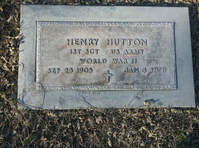
Veterans Day
|
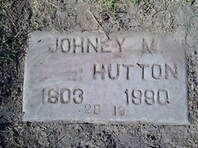
Veterans Day
|
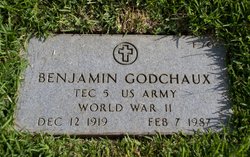
Veterans Day
|
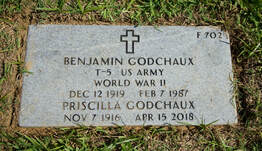
Veterans Day
|

|

"Veterans Day is an official United States public holiday, observed annually on November 11, that honors military veterans, that is, persons who served in the United States Armed Forces. It coincides with other holidays, including Armistice Day and Remembrance Day, celebrated in other countries that mark the anniversary of the end of World War I; major hostilities of World War I were formally ended at the 11th hour of the 11th day of the 11th month of 1918, when the Armistice with Germany went into effect. The United States previously observed Armistice Day. The U. S. holiday was renamed Veterans Day in 1954. Veterans Day is not to be confused with Memorial Day; Veterans Day celebrates the service of all U. S. military veterans, while Memorial Day (above) honors those who died while in military service."
|

|
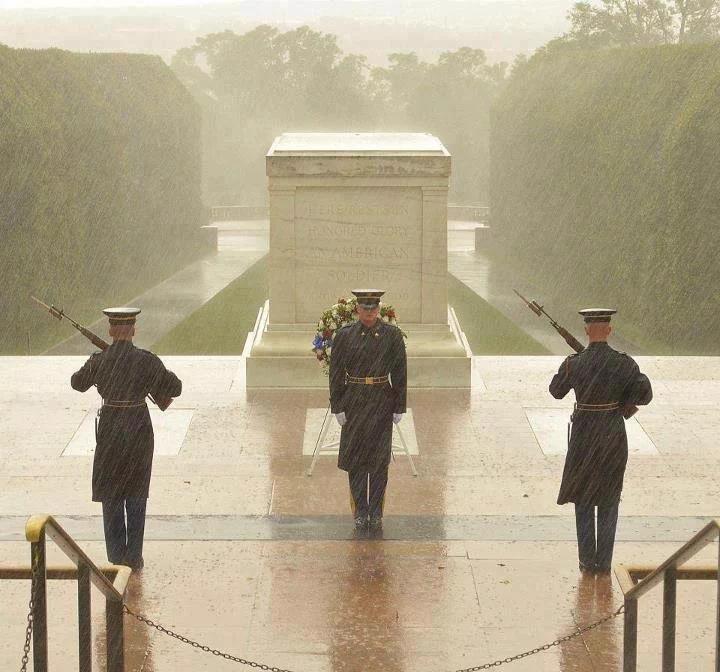
"Tomb of the Unknown Soldier"
|
"While Arlington National Cemetery is open, during the day in summer months from April 1 to September 30, the guard is changed every half hour. During the winter months, from October 1 to March 31, the guard is changed every hour. After the cemetery [is closed] to the public (7pm to 8am April through September, and 5pm to 8am October through March), the guard is changed every 2 hours. The ceremony can be witnessed by the public whenever Arlington National Cemetery is open. The guard change is very symbolic, but also conducted in accordance with Army regulations. The relief commander or assistant relief commander, along with the oncoming guard, are both required for a guard change to take place. The relief commander orders the guard being relieved to "pass on your orders" to the oncoming guard. The guard being relieved will say to the oncoming guard, "Post and orders remain as directed." The oncoming guard's response is always, "Orders acknowledged." During changes when the public is witnessing the ceremony, the commander will inform the public that the ceremony is about to take place and that those in attendance should remain "silent and standing" throughout the entire event."
Source: Wikipedia.org Monday, May 28, 2018 |
ClassicShoppes.us
~Where Class & Distinction Meets~
~Where Class & Distinction Meets~
