This post and/or page contains affiliate links, at no additional cost
to you I am compensated only if you purchase after clicking on the links.
to you I am compensated only if you purchase after clicking on the links.

This post and/or page contains affiliate links,
at no additional cost to you I am compensated only if you purchase after clicking on the links. 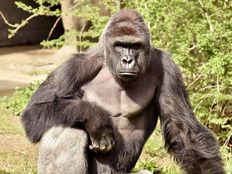 "Harambe" "Harambe"
"Harambe (May 27, 1999–May 28, 2016), a 440 lb male critically endangered silverback gorilla, was shot and killed when a child climbed into his enclosure and fell into the moat. Harambe was bred at the Gladys Porter Zoo in Brownsville, Texas. He was named by Dan Van Coppenolle after the song "Harambe" by Rita Marley. On September 18, 2014 Harambe was transferred to the Cincinnati Zoo and Botanical Garden to learn adult gorilla behavior and join a new social group. Harambe was fatally shot by zoo officials on May 28, 2016, after a three-year-old boy slipped into Harambe's enclosure. The incident was recorded by a bystander and uploaded to YouTube, where the video went viral. Zoo director Thane Maynard stated, "The child was being dragged around ... His head was banging on concrete. This was not a gentle thing. The child was at risk." The shooting was controversial, with some observers stating that it was not clear whether or not Harambe was likely to harm the child, and others calling for the boy's parents and/or the zoo to be held accountable for the gorilla's death. Police are investigating possible criminal charges while the parents of the boy defended the zoo's actions. The incident received global publicity; Ricky Gervais, Brian May, and Piers Morgan criticized the shooting while Donald Trump and Jack Hanna defended the zoo's actions. Special Note: On January 19, 2017, 'Harambe's grandmother [was] humanely euthanized after suffering from terminal health issues. She was almost 50.'
Source: Twitter.com | Thursday, January 19, 2017, 9:11PM This post and/or page contains affiliate links,
at no additional cost to you I am compensated only if you purchase after clicking on the links.  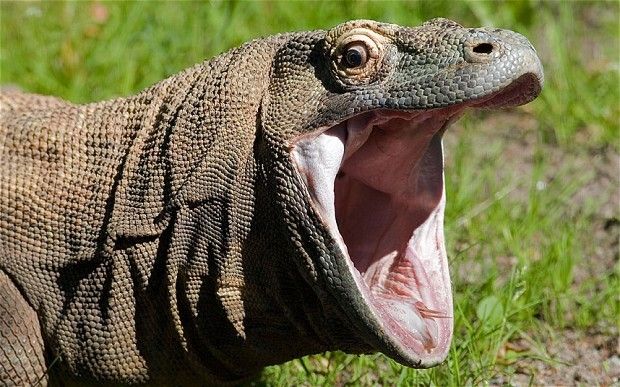
"The Komodo dragon also known as the Komodo monitor, is a large species of lizard found in the Indonesian islands of Komodo, Rinca, Flores, Gili Motang, and Padar. A member of the monitor lizard family Varanidae, it is the largest living species of lizard, growing to a maximum length of 10 ft in rare cases and weighing up to approximately 150 lbs. As a result of their size, these lizards dominate the ecosystems in which they live. Komodo dragons hunt and ambush prey including invertebrates, birds, and mammals. It has been claimed that they have a venomous bite; there are two glands in the lower jaw which secrete several toxic proteins. The biological significance of these proteins is disputed, but the glands have been shown to secrete an anticoagulant. Komodo dragon group behavior in hunting is exceptional in the reptile world. The diet of big Komodo dragons mainly consists of deer, though they also eat considerable amounts of carrion. Komodo dragons also occasionally attack humans in the area of West Manggarai Regency where they live in Indonesia. The Komodo dragon seems unlikely to be one of the most dangerous animals in the world, but it is because of its vicious attacks and the fact that it isn’t fussy as to what it will make it’s dinner. Although they do have a low human kill count, this is most likely because of the lack of contact humans have with this animal, as well as the komodo dragons need to eat, which is only around once a month."
|
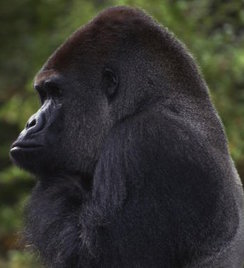 "Hanabi-Ko "Koko"" "Hanabi-Ko "Koko""
"Hanabi-Ko "Koko" (July 4, 1971–June 19, 2018) was a female western lowland gorilla who was known for having learned a large number of hand signs from a modified version of American Sign Language (ASL). Her instructor and caregiver, Francine Patterson, reported that Koko was able to understand more than 1,000 signs of what Patterson calls "Gorilla Sign Language" (GSL). In contrast to other experiments attempting to teach sign language to non-human primates, Patterson simultaneously exposed Koko to spoken English from an early age. It was reported that Koko understood approximately 2,000 words of spoken English, in addition to the signs. Koko's life and learning process has been described by Patterson and various collaborators in a number of books, peer-reviewed scientific articles, and on a website. As with other great-ape language experiments, the extent to which Koko mastered and demonstrated language through the use of these signs is disputed. It is generally accepted that she did not use syntax or grammar, and that her use of language did not exceed that of a young human child. Hanabi-Ko "Koko", was born at the San Francisco Zoo and lived most of her life in Woodside, California, at The Gorilla Foundation's preserve in the Santa Cruz Mountains. The name Hanabiko ("fireworks child") is a reference to her date of birth, the Fourth of July. Koko gained public attention upon a report of her having adopted a kitten as a pet and creating a name for him. Patterson originally cared for Koko at the San Francisco Zoo as part of her doctoral research after Koko developed a life-threatening illness. Koko was loaned to Patterson and subsequently remained with her, supported by The Gorilla Foundation. Koko's weight of 280 pounds was higher than would be normal for a gorilla in the wild, where the average weight is approximately 150–200 pounds but the foundation stated that Koko "is, like her mother, a larger frame Gorilla." For a while, Koko lived with another gorilla, Michael, who also learned sign language but he died in 2000. She lived with a male gorilla, Ndume, until her death. Koko died in her sleep in the early morning on June 19, 2018, at the Gorilla Foundation's preserve in Woodside, California, at the age of 46. The Gorilla Foundation released a statement that "Her impact has been profound and what she has taught us about emotional capacity of gorillas and their cognitive abilities will continue to shape the world." Patterson reported that Koko's use of signs indicate that she mastered the use of sign language. Koko's training began at the age of 1, and according to Patterson, she was able to use more than 1,000 signs, including fingering people. Patterson reported that Koko made several complex uses of signs that suggested a more developed degree of cognition than is usually attributed to non-human primates and their use of communication. For example, Koko was reported to use displacement (the ability to communicate about objects not currently present). At age 19, Koko was able to pass the mirror test of self-recognition, which most other gorillas fail. She had been reported to relay personal memories. Koko was reported to use meta-language, being able to use language reflexively to speak about language itself, signing "good sign" to another gorilla who successfully used signing. Koko was reported to use language deceptively, and to use counterfactual statements for humorous effects, suggesting an underlying theory of other minds. Patterson reported that she documented Koko inventing new signs to communicate novel thoughts. For example, she says that nobody taught Koko the word for "ring," but to refer to it, Koko combined the words "finger" and "bracelet," hence "finger-bracelet." Criticism from some scientists centered on the fact that while publications often appear in the popular press about Koko, scientific publications with substantial data are fewer in number. Other researchers argued that Koko did not understand the meaning behind what she is doing and learnt to complete the signs simply because the researchers rewarded her for doing so (indicating that her actions were the product of operant conditioning). Another concern that has been raised about Koko's ability to express coherent thoughts through signs is that interpretation of the gorilla's conversation is left to the handler, who may see improbable concatenations of signs as meaningful. For example, when Koko signed "sad" there was no way to tell whether she meant it with the connotation of "How sad." Following Patterson's initial publications in 1978, a series of critical evaluations of her reports of signing behavior in great apes argued that video evidence suggested that Koko was simply being prompted by her trainers' unconscious cues to display specific signs, in what is commonly called the Clever Hans effect. A bonobo named Kanzi, who had learned to communicate using a keyboard with lexigrams, picked up some sign language from watching videos of Koko; Kanzi's researcher, Sue Savage-Rumbaugh, did not realize he had done so until Kanzi began signing to anthropologist Dawn Prince-Hughes, who had previously worked closely with gorillas. Researchers at The Gorilla Foundation said that Koko asked for a cat for Christmas in 1983. Ron Cohn, a biologist with the foundation, explained to the Los Angeles Times that when she was given a lifelike stuffed animal, she was less than satisfied. She did not play with it and continued to sign "sad." So on her birthday in July 1984, she was able to choose a kitten from a litter of abandoned kittens. Koko selected a gray male Manx and named him "All Ball." Penny Patterson, who had custody of Koko and who had organized The Gorilla Foundation, wrote that Koko cared for the kitten as if it were a baby gorilla. Researchers said that she tried to nurse All Ball and was very gentle and loving. They believed that Koko's nurturing of the kitten and the skills she gained through playing with dolls would be helpful in Koko's learning how to nurture an offspring. In December 1984, All Ball escaped from Koko's cage and was hit and killed by a car. Later, Patterson said that when she signed to Koko that All Ball had been killed, Koko signed "Bad, sad, bad" and "Frown, cry, frown, sad." Patterson also reported later hearing Koko making a sound similar to human weeping. In 1985, Koko was allowed to pick out two new kittens from a litter to be her companions. The animals she chose, she named "Lipstick" and "Smoky," were also Manxes. Koko picked the name after seeing the tiny orange Manx for the first time. When her trainer asked the meaning of the name, Koko answered, Lips lipstick. Dr. Patterson was confused until she realized that Lips had a pink nose and mouth, unlike All Ball's gray markings. Koko picked Smoky's name because the kitten looks like a cat in one of the gorilla's books. To celebrate her birthday in July 2015, Koko was presented another litter of kittens. Picking two, she named them Miss Black and Miss Grey."
Source: Wikipedia.org | Saturday, June 23, 2018, 7:31AM |
|
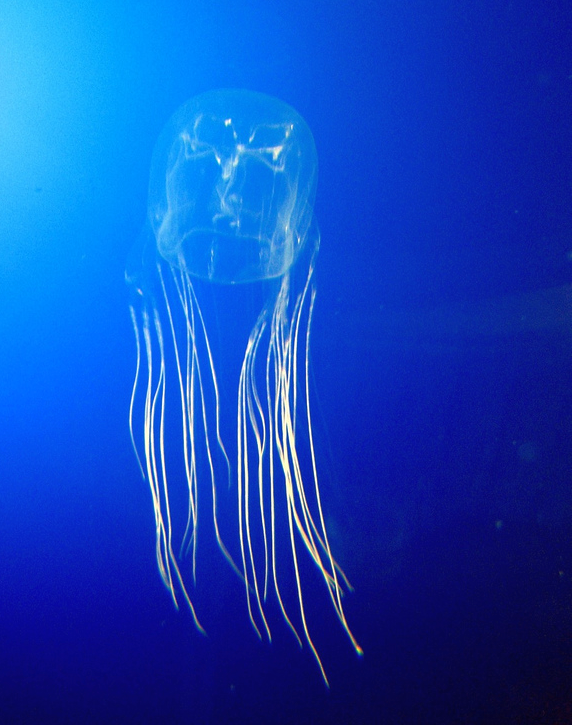
"There are many different types of jellyfish that can be deadly to humans, but the sea wasp box jellyfish is in a completely different league. If tangled in this jellyfish’s tentacles for the right amount of time you will start to dissolve. Though it is easily seen as it has a glowing effect, even just a light sting from this sea creature will leave you in extreme pain."
|

|
"There are many snakes that can kill humans with their venom, but there are not many that can kill up to 20 humans with just one bite. The Eastern Brown Snake’s venom is that deadly. It should be avoided completely; it is often found in Australia, Indonesia and Papa New Guinea."
|
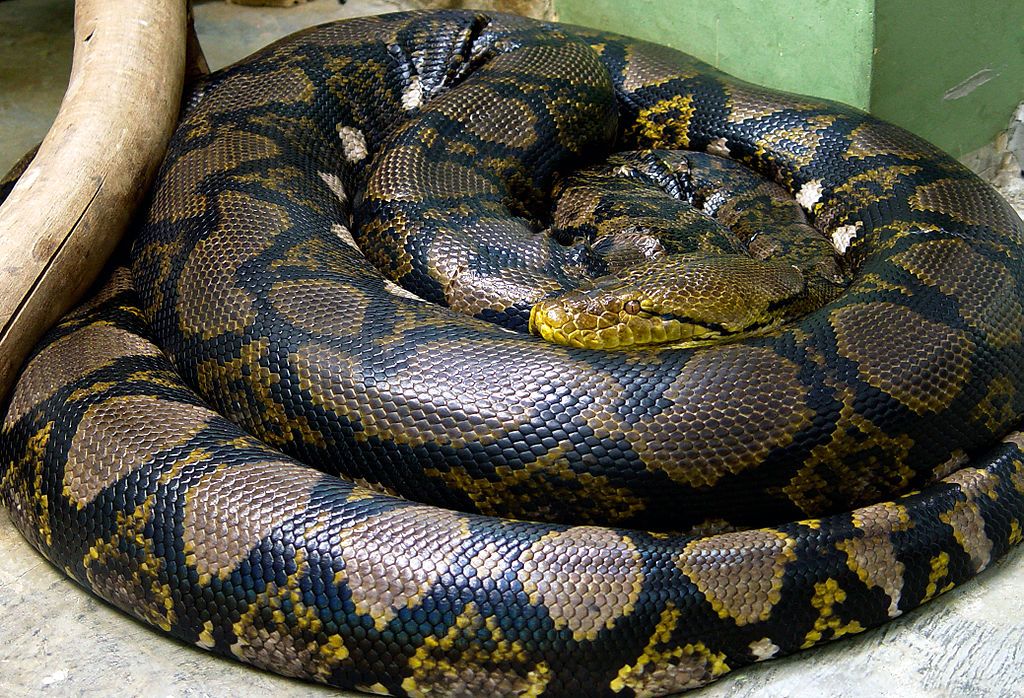
"The reticulated python is a species of python found in Southeast Asia. They are the world's longest snakes and longest reptiles and among the three heaviest snakes. Like all pythons, they are nonvenomous constrictors and normally not considered dangerous to humans. Although large specimens are powerful enough to kill an adult human, attacks are only occasionally reported. Attacks on humans are rare, but this species has been responsible for several human fatalities, in both the wild and captivity."
|
|
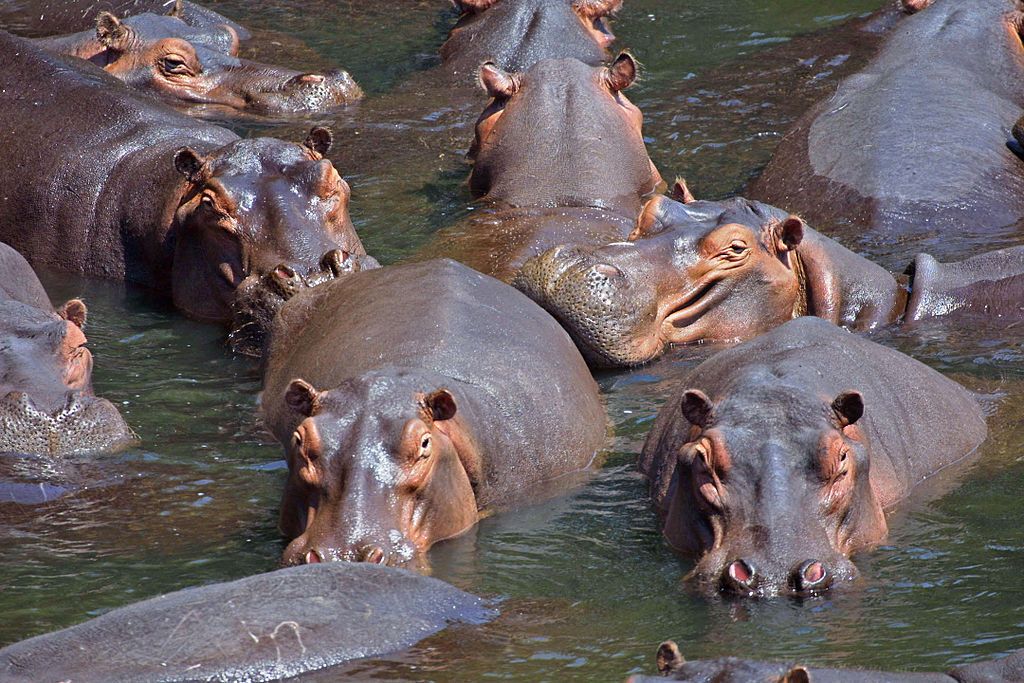
"The Hippo is classed as one of the most threatening animals in the world, not just because of how wide they can open their jaw, or because of how powerful they can be, but also because of how unpredictable they are. Even though they are herbivores, Hippopotamus’ have often been known to attack without being provoked."
|
|
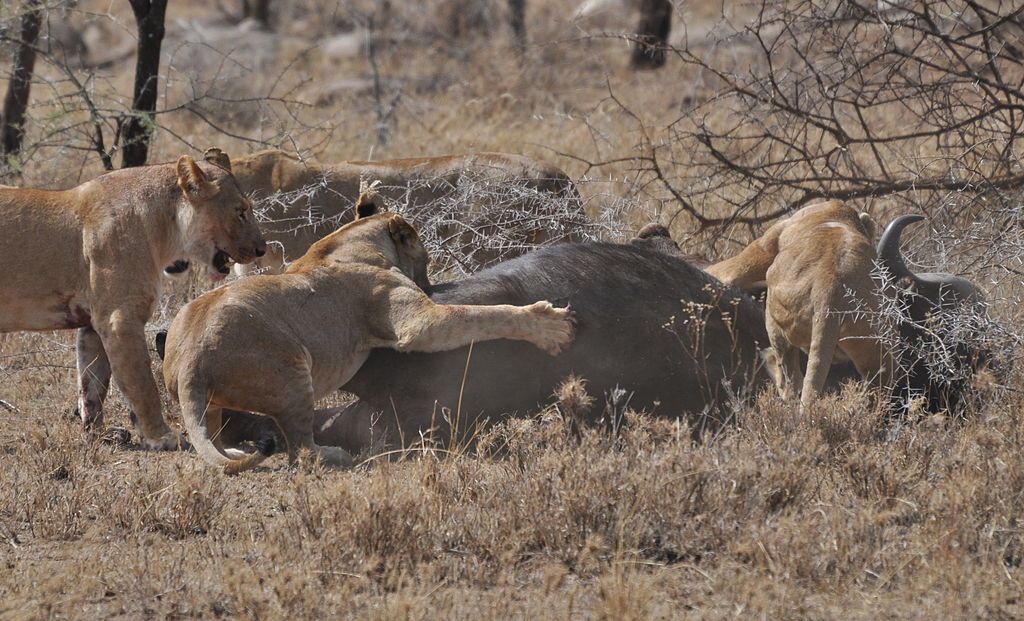
"The speed and the strength of the tremendous and much feared African lion is what makes the magnificent beast so powerful. Not only can they be deadly when by themselves, but they are known to hunt and attack in packs. The strength that can come from just one slash of their paw is unimaginable, meaning, that they are not only feared for their bite."
|
|
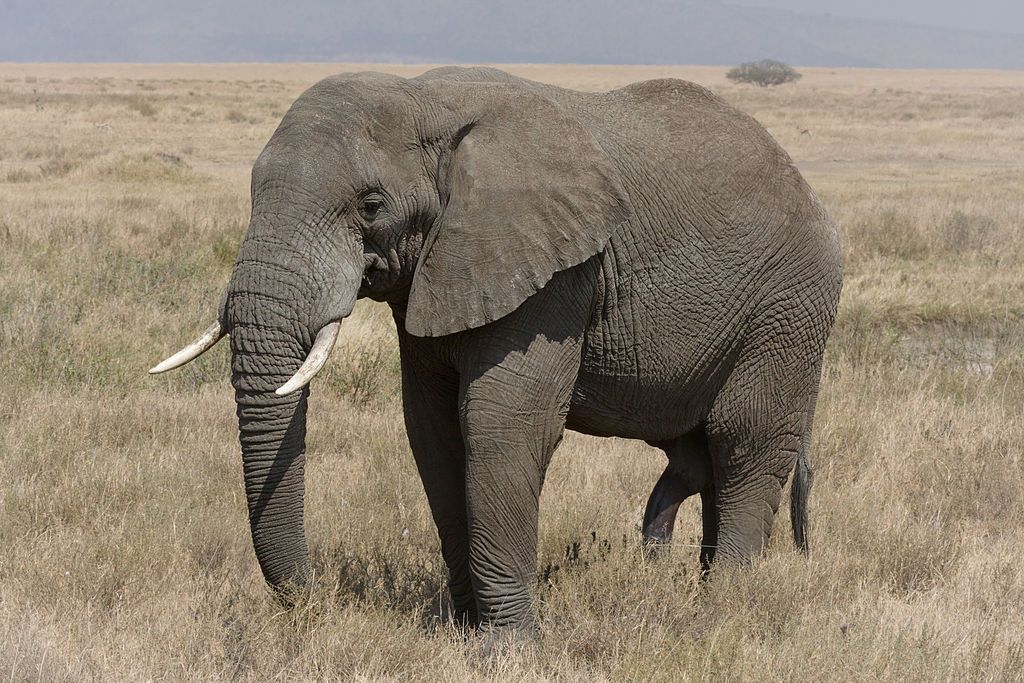
"Having no natural predators and being the largest land animal in the world, the African Bush Elephant, in the wild, can be deadly. Being extremely powerful is not completely down to its size, it also has tremendous hearing and a magnificent sense of smell, reportedly being able to smell people from around a mile away."
|
|
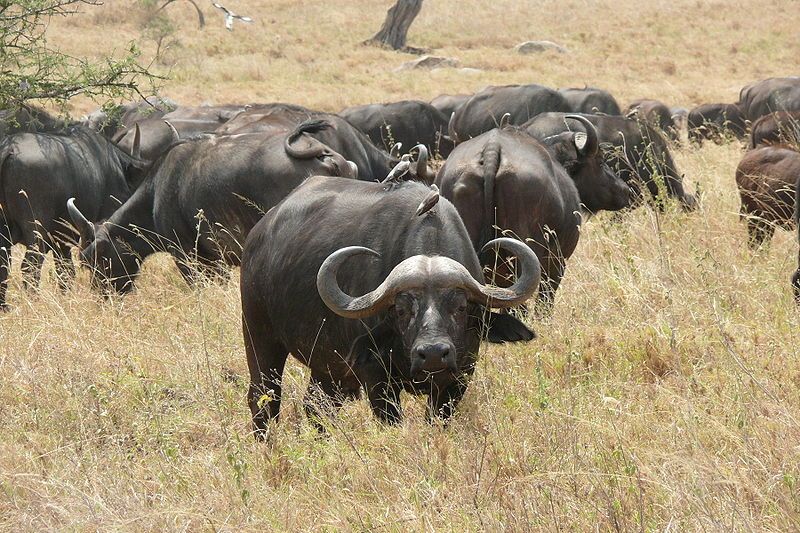
"The Cape buffalo is an extremely powerful animal, and is often very unpredictable. It has often been known to attack without being provoked, and is reported to kill around 200 humans each year. Their thick skin means that even when shot, they can still charge and attack."
|
|
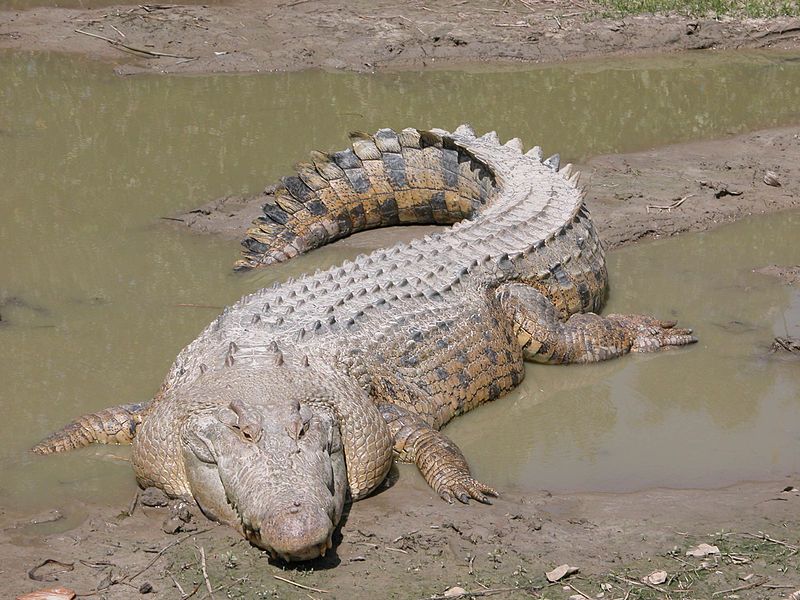
"The saltwater crocodile is completely relentless and is definitely one of the most dangerous animals in the world. It isn’t fussy as to what it will eat, and the way that it kills is like no other. Most animals do not have a chance against their extremely strong jaws and their ability to hold down their prey until they drown."
|
ClassicShoppes.us
~Where Class & Distinction Meets~
~Where Class & Distinction Meets~
